Specifying Height Safety Systems Around Solar
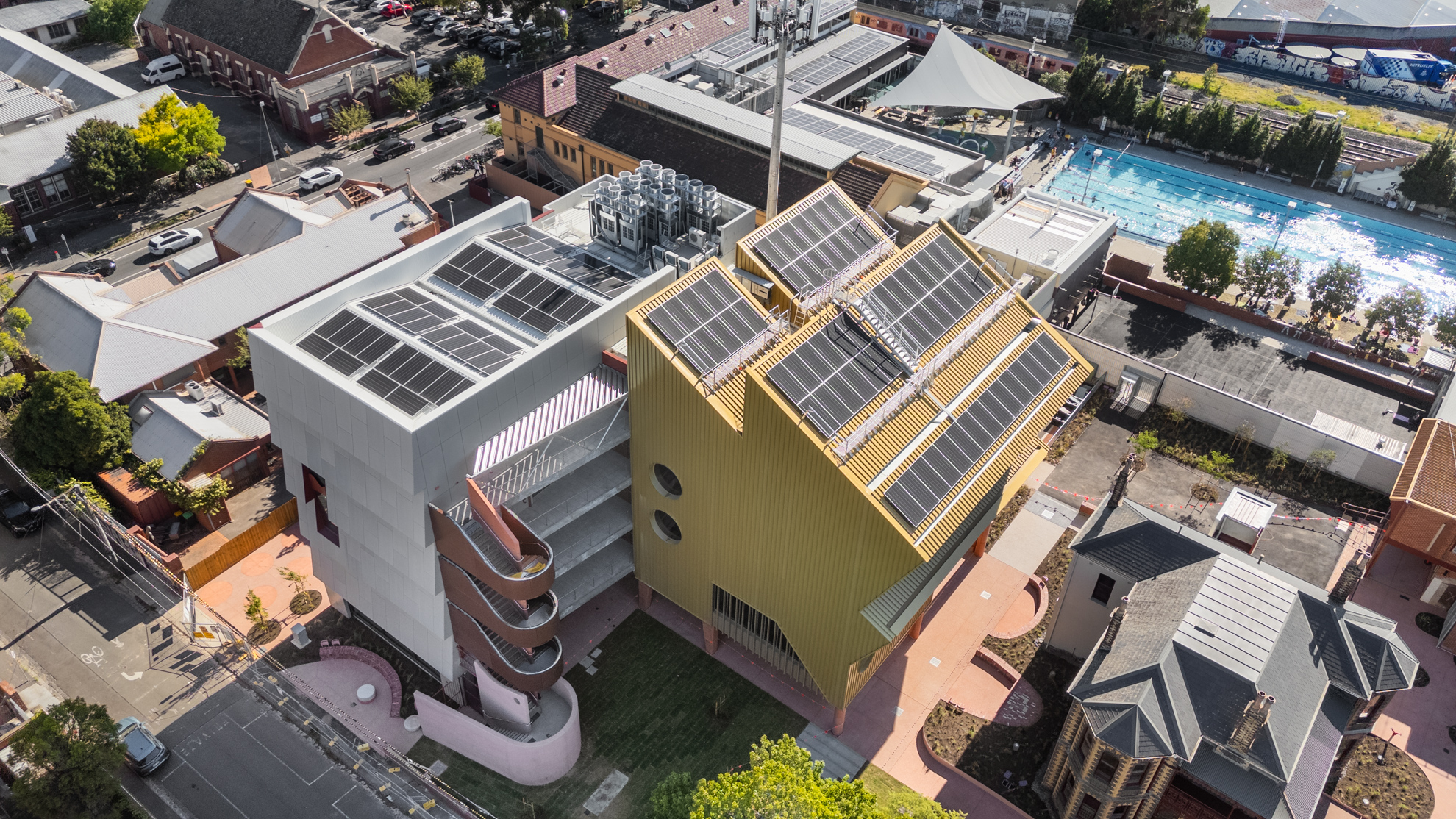
Solar is increasingly being factored into new building design and construction. In fact, Australian businesses installed a record-breaking 1 GW of solar on commercial buildings in 2024. While this is a wonderful step towards reducing running costs, it can pose challenges for architects tasked with integrating both safe access systems and solar panels onto a building’s roof.
Put simply, the more roof space there is for solar panels, the greater the energy production for the building. Yet, maximising solar space shouldn’t come at the expense of height safety.
Here are 4 ways architects can specify height safety systems that work around solar and maximise the safety of end-users.
1. Opt for static lines or rigid rails for fall arrest around solar layouts
Static lines and rigid rails are the safest and most efficient fall arrest solutions for roofs with large solar installations. Unlike anchor points, they offer a continuous, secure connection that allows users to move freely without the hassle of constantly clipping in and out of separate anchor points.
To add context, anchor points must be positioned closer together around solar layouts due to the reduced distance to fall edges. This results in frequent connecting and disconnecting—adding time, effort, and potential risk to each task.
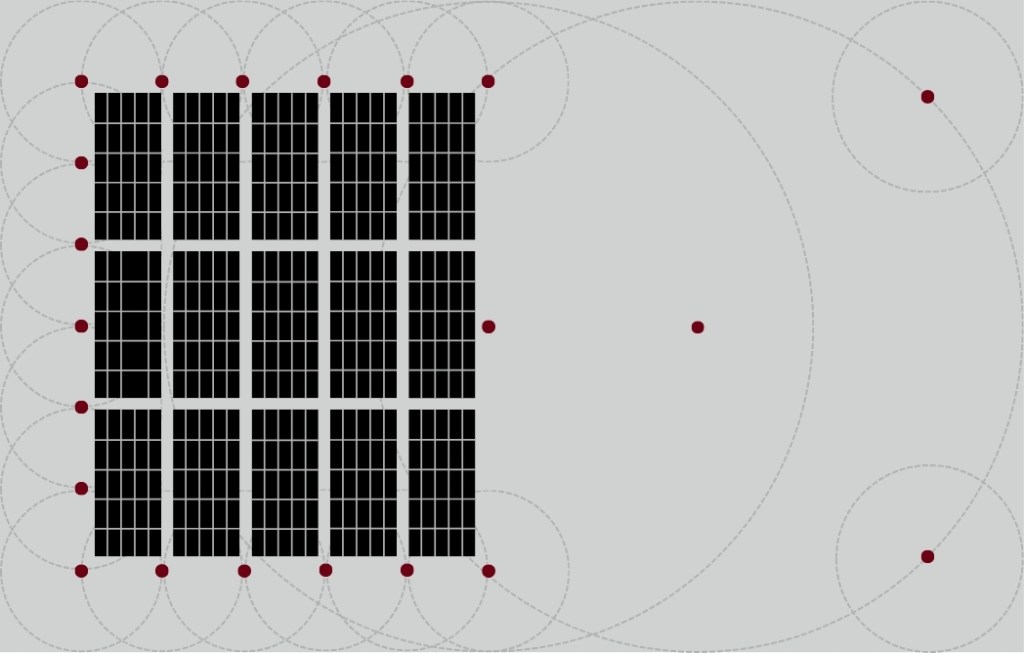
Anchor points must be installed equal distance from the roof edge and each other, resulting in more connections and disconnections where the distance to fall edges is reduced by solar panels.
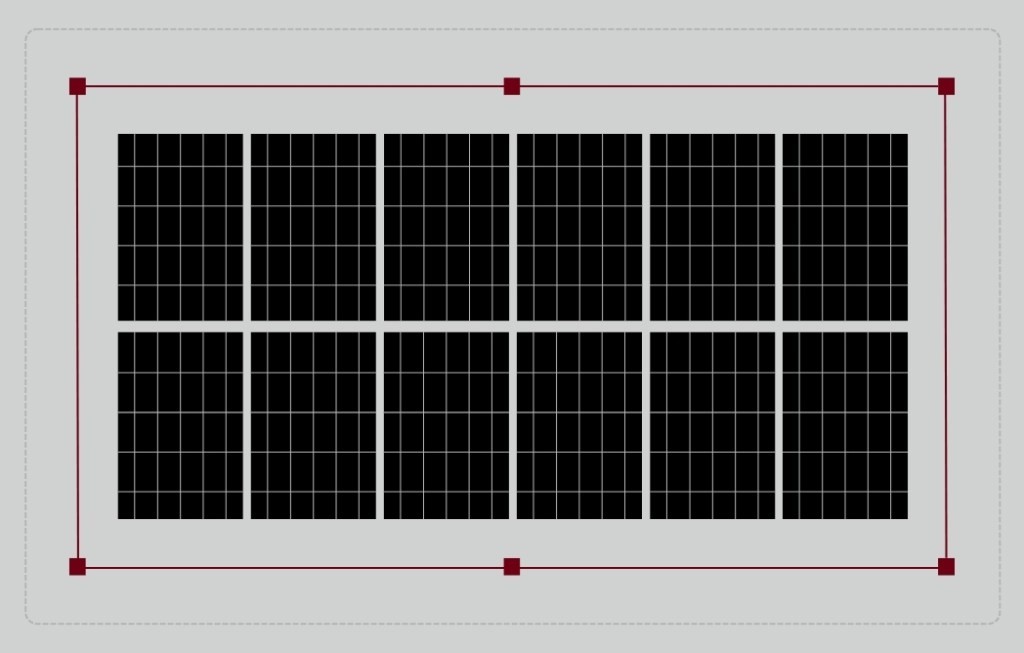
Static lines and rigid rails provide a continuous, secure connection for a safe and user-friendly experience.
2. Increase usable solar area with perimeter guardrails
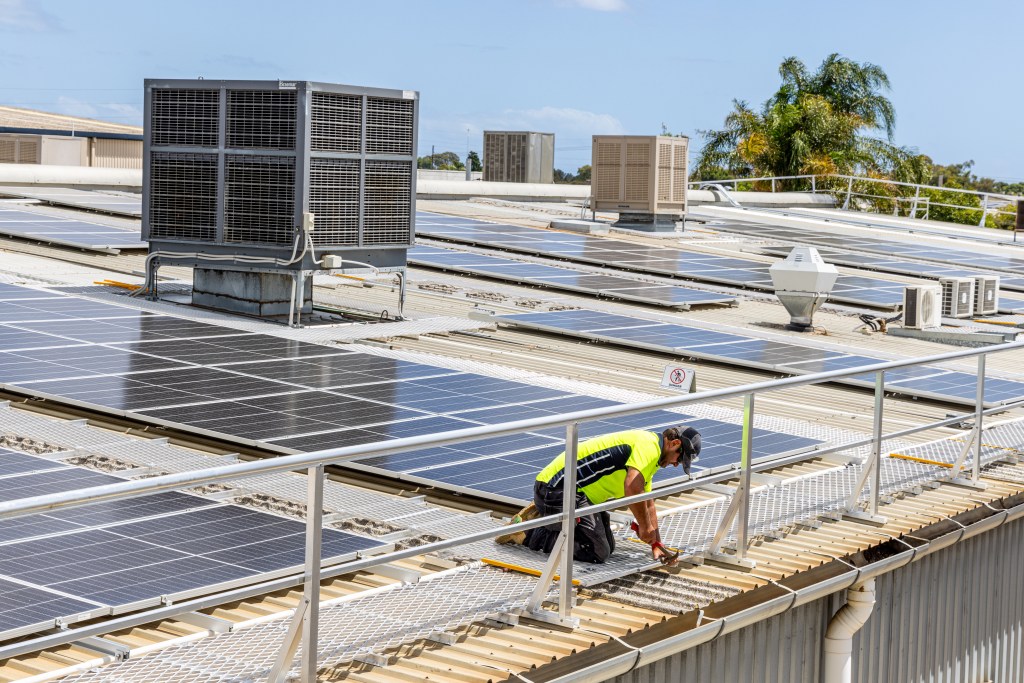
Installing a guardrail around your roof’s perimeter removes the need for a fall arrest system and increases usable solar area as minimal space is required between edge panels and fall edges. Best of all, guardrail is a passive solution. This means it requires no active participation from the user, like wearing a harness, reducing the chance of accidents caused by user-error. Guardrails also provide better freedom of movement and more efficient access for maintenance workers than fall arrest solutions.
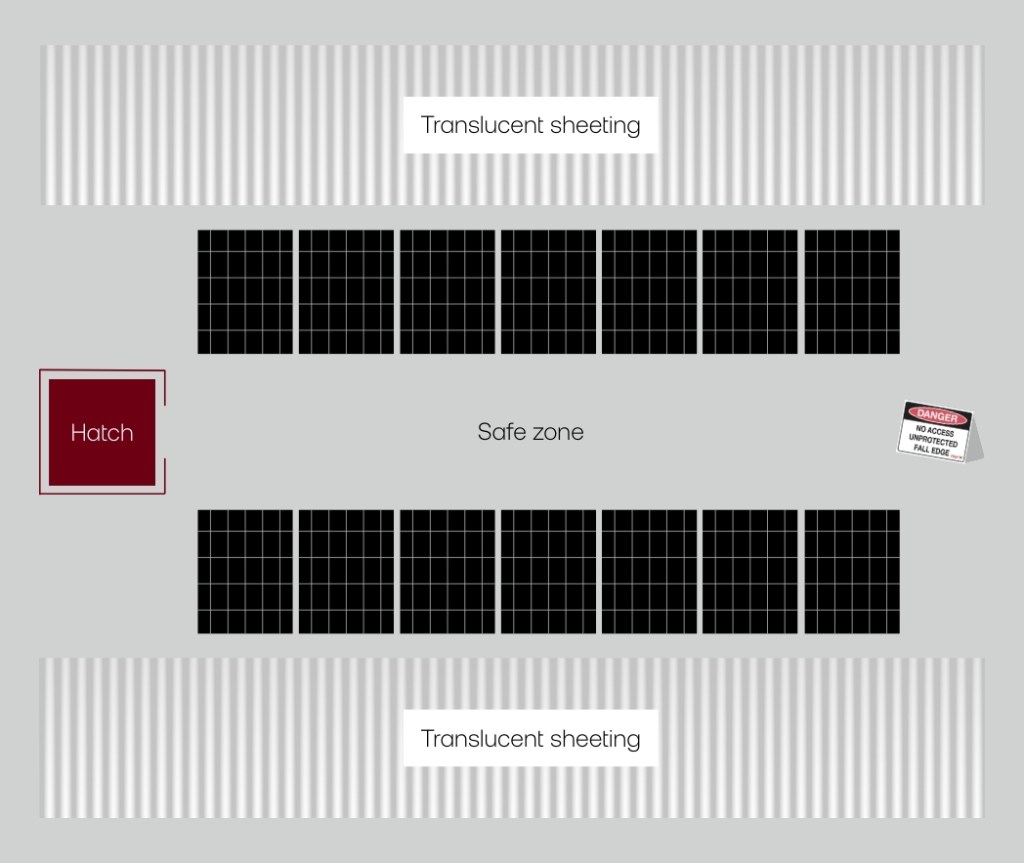
4. Block access to fall-risk areas through strategic solar placement
When designing roof safety on large industrial buildings, there are often skylights (or translucent sheeting) to consider in conjunction with solar panels and other roof mounted plant. Placing solar arrays alongside rows of skylights can effectively block access to fall-risk areas, thereby eliminating the need for measures such as guardrails, protector mesh or fall arrest systems. Panels can then be cleaned from the safe zone in the centre using extendable equipment (depending on distance ).
For help determining the best solar-friendly roof safety system for your building, please get in touch with a Hart project consultant early in the building design phase. We’ll work alongside your solar subcontractors to ensure optimal solar space whilst keeping maintenance workers safe.