The construction industry is subject to a large amount of health and safety legislation, with regulations and standards that vary from state to state. Navigating these requirements can be complex, yet it is essential to ensure the safety of building occupants, particularly for those performing maintenance in high-risk areas.
To ensure the safety of people working at heights, and navigate safety regulations effectively, it’s essential to have a clear understanding of their legal hierarchy. This article outlines the hierarchy of safety legislation in Australia and explains how each section works together from a legal perspective.
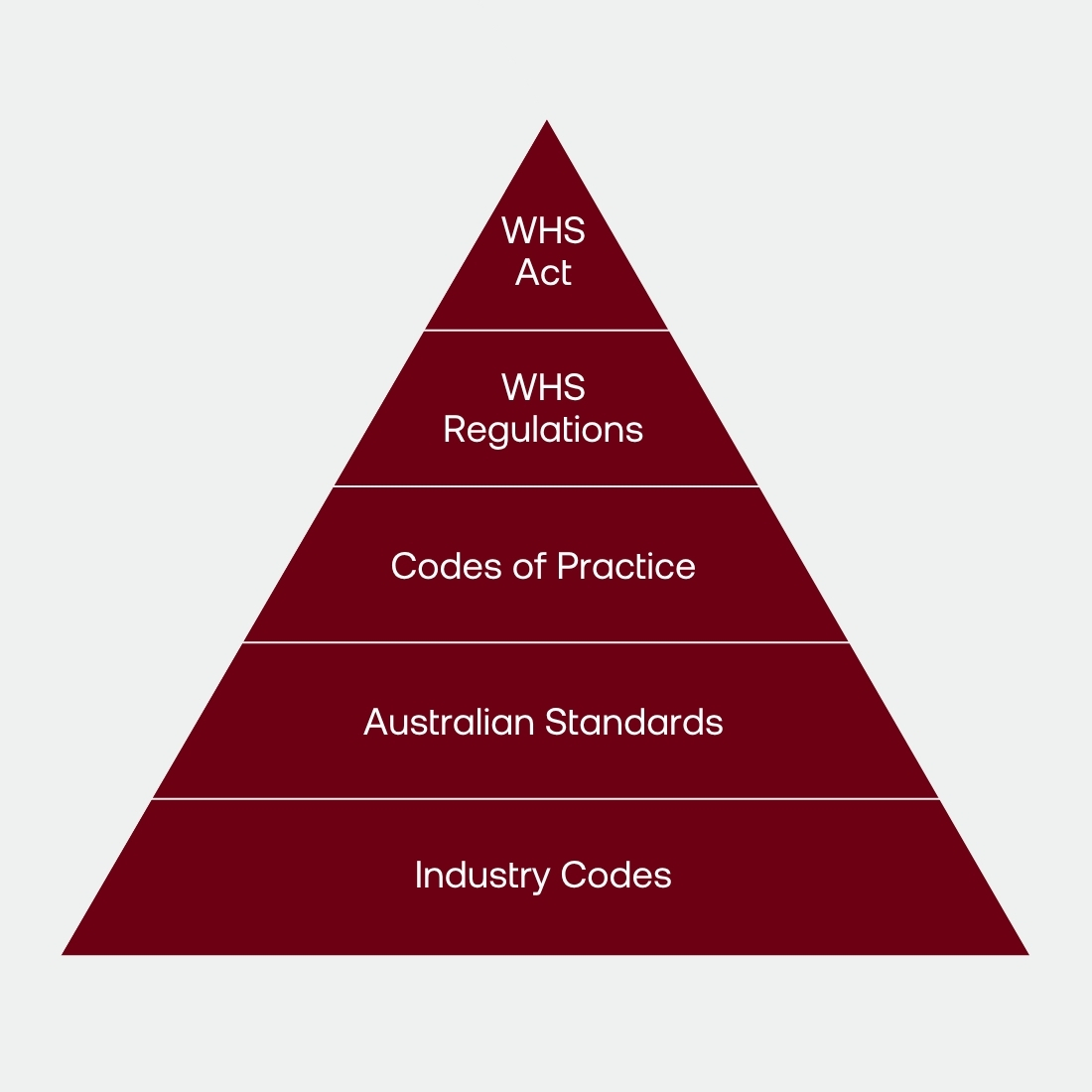
Hierarchy of Safety Legislation Overview
This diagram outlines the hierarchy in cascading order of legal force. Guidance material and Australian Standards relevant to workplace and occupational settings, although not strictly “legislation” are included in this hierarchy. Each level includes specific measures and best practices to ensure safety for people working at heights
Work Health and Safety Act
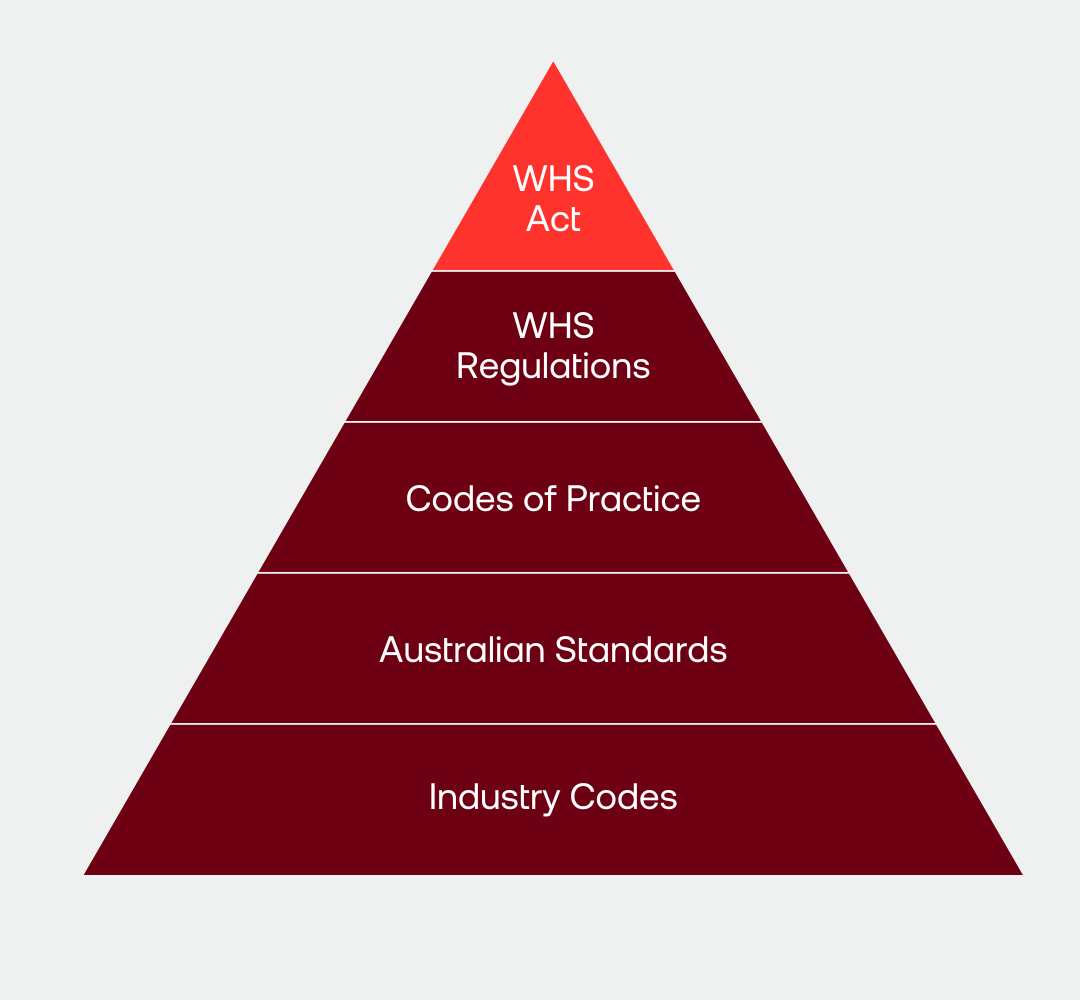
Previously known as the OHS Act, the Work Healthy and Safety (WHS) Act is at the top of the hierarchy and its provisions are mandatory by law. The section of the WHS Act which applies to those involved in work at heights is section 22. Section 22 states:
“The designer must ensure, so far as is reasonably practicable, that the plant, substance or structure is designed to be without risks to the health and safety of persons who carry out any reasonably foreseeable activity at a workplace in relation to inspection, maintenance, repair, operation or cleaning of plant.”
In other words, any hazards and risks that exist in the design of a building must be eliminated or controlled during the design phase. This includes risks relating to maintenance where an operator is working at height, as well as risks relating to entering and exiting a workplace where falls may occur.
Building owners are also responsible for the health and safety of workers under the WHS Act and must, so far as is reasonably practicable, eliminate or minimise risks for operators working at heights.
Work Health and Safety Regulations
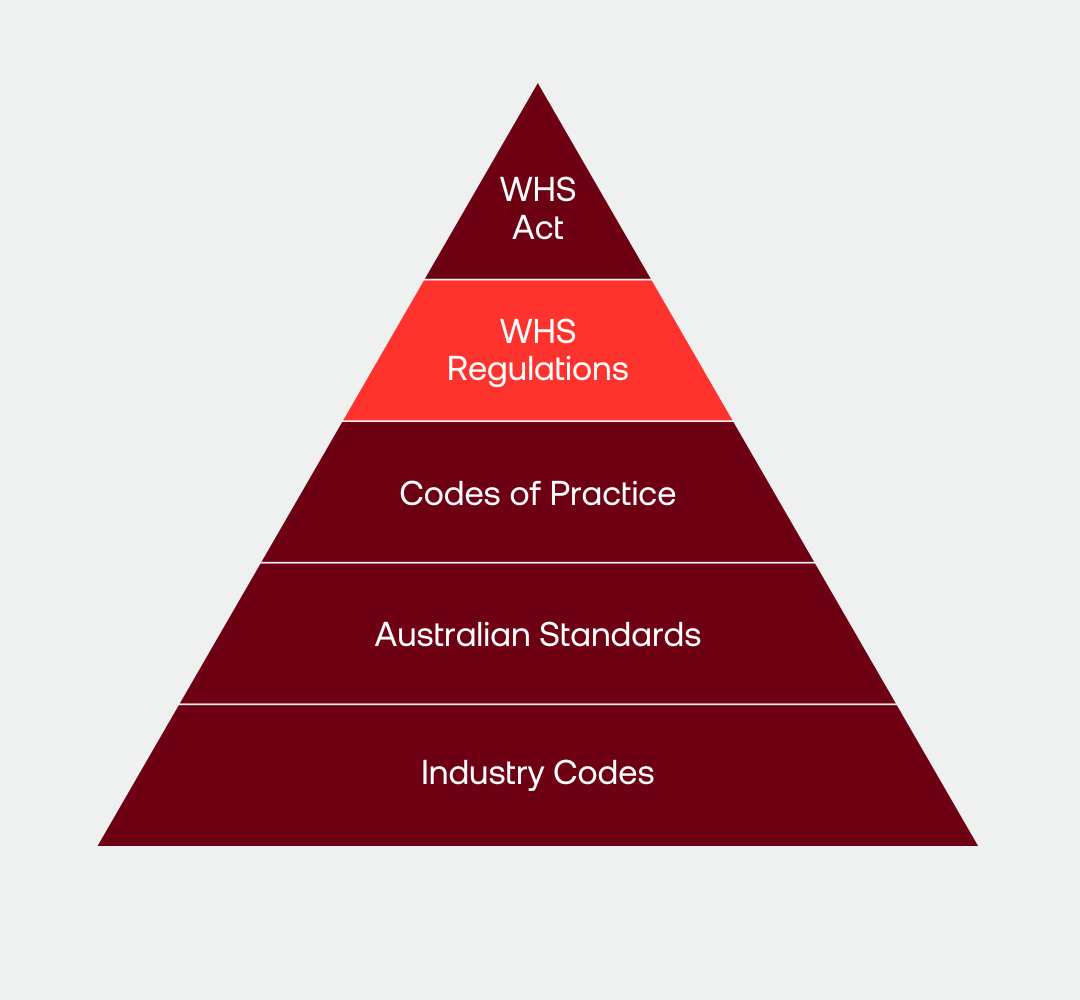
WHS Regulations provide further detail on how to meet the duties set out by the WHS Act. The key regulatory bodies for the WHS Act are:
- Safe Work Australia: Develops ‘model’ laws and regulations for workplace safety, including working at heights.
- State Work Health and Safety Authorities: Enforce compliance with WHS laws within their respective jurisdictions. Although each state/territory has similar requirements, there are some differences. It is important that you find out and comply with the appropriate legislation and information in your state or territory.
Regulations provided by Safe Work Australia and state authorities are designed to keep workers safe, reduce compliance costs for businesses and government and improve efficiency for health and safety regulators.

Codes of Practice
Codes of practice provide duty holders with guidance on how to manage specific height safety and access risks. Unless explicitly stated in a code of practice that a provision is a requirement of the WHS Act or Regulations, provisions in codes of practice are not mandatory and a duty-holder can comply by following another method. However, a court may regard a code of practice as evidence of what is known about a hazard, and the ways to control risks in the circumstances to which the code relates.
The Codes of Practice that apply to Safe Work at Height are:
- Code of Practice – Managing the Risk For Falls at Workplaces – Safe Work Australia
- Code of Practice – Safe Design of Structures – Safe Work Australia
- Code of Practice – Prevention of Falls in General Construction – Safe Work Australia
- Code of Practice – How to Manage Work Health & Safety Risks – Safe Work Australia
Australian Standards
Australian Standards outline what products are needed to prevent falls and ensure safety for people working at heights. The standards also state how those products should be designed, tested and installed to comply. The Australian Standards that apply to safe work at height are:
- AS1657:2018 – Fixed Platforms, Walkways, Stairways and Ladders
- AS/NZS 1891:2020 (4 parts) – Industrial fall arrest systems and devices
- AS/NZS 5532:2013 – Single point anchor device – manufacturer requirements*
- AS/NZS ISO 22846:2020 (2 parts) – Industrial rope access systems – abseil (previously AS/NZS 4488)
Anyone installing or specifying a safe access system should ensure it complies and has been tested to all applicable Australian Standards.

Industry Codes
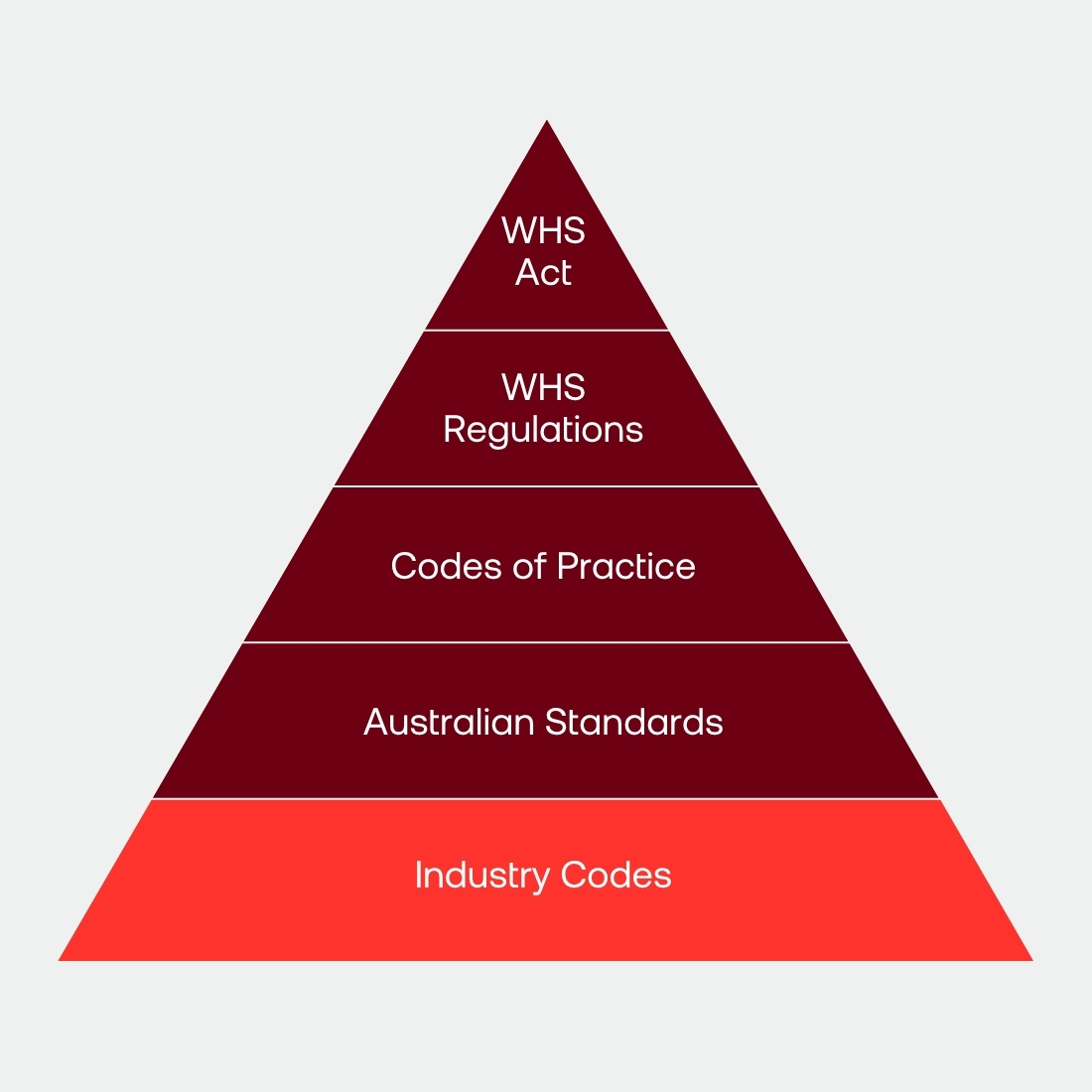
Industry Codes produced by the Working at Heights Association (WAHA) have been compiled with input from regulators, manufacturers, industry associations and people with technical knowledge in the subject. They provide guidance and clarification on the Australian Standards and Codes of Practice to ensure the design, selection and installation of height safety and fall protection equipment is consistent with industry expectations.
Safe, compliant height safety
A compliant safe-access system reduces the risks that people working at heights are exposed to. The type of system required varies greatly from building to building and should be tailored to suit the features of building and requirements of maintenance workers.
At Hart, we take a holistic approach to safe access. With quality products, smart designs and diligent installation, we can exceed the demands of any application. Speak with a Hart project consultant today for help bringing your safe access project to life.